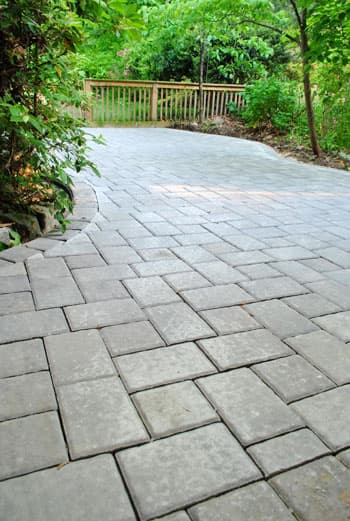
Paver patios & walkways
Built on a compacted base that actually holds its shape.

Get a free quote
By submitting you agree to be contacted about your project. We respect your privacy. For faster service, call (909) 927-0141.
What's included
Paver patios and walkways are built from individual concrete, brick, or stone pavers set in a pattern over a compacted aggregate base — unlike a poured slab, the strength of a paver surface comes almost entirely from what's underneath it, not the pavers themselves.
We excavate to the right depth, install and compact a road-base aggregate layer with slope built in for drainage, then set the pavers to pattern over a leveling layer of bedding sand. Once set, the whole surface is compacted with a plate compactor and the joints are locked with polymeric sand so the pavers stay tight instead of shifting and spreading over time.
Pavers are a good fit anywhere you want a surface that can be lifted and reset if something needs to happen underneath it later — irrigation, drainage, or utility work — which isn't possible with poured concrete.
How it works
Step by step, here's what actually happens on site:
- 1Walk the space and talk through paver options, pattern, and layout.
- 2Excavate to depth and install a compacted aggregate base with proper slope for drainage.
- 3Set pavers to pattern over a leveling sand bed and cut borders to fit.
- 4Compact the finished surface and lock the joints with polymeric sand.
Why All American Concrete
A paver surface is only as good as the base underneath it — we don't skip compaction steps to move faster, because that's exactly what causes pavers to sink, shift, or spread apart within a year or two.
Pavers can be matched with the stone and retaining wall work we also do, so a patio, walkway, and wall can be designed to work together instead of as separate projects.
Our process
- 01
Free estimate
Walk the space, talk through paver or stone options and layout, and get a real, itemized number.
- 02
Excavate & base
Excavate to depth, install and compact a road-base aggregate layer with proper slope for drainage — the base is what keeps pavers from shifting or settling.
- 03
Set & compact
Set pavers or stone to pattern, cut borders to fit, then compact the whole surface with a plate compactor and lock joints with polymeric sand.
- 04
Walkthrough
Walk the finished space, confirm it's level and tight, and cover joint-sand maintenance before calling the job done.
Project gallery
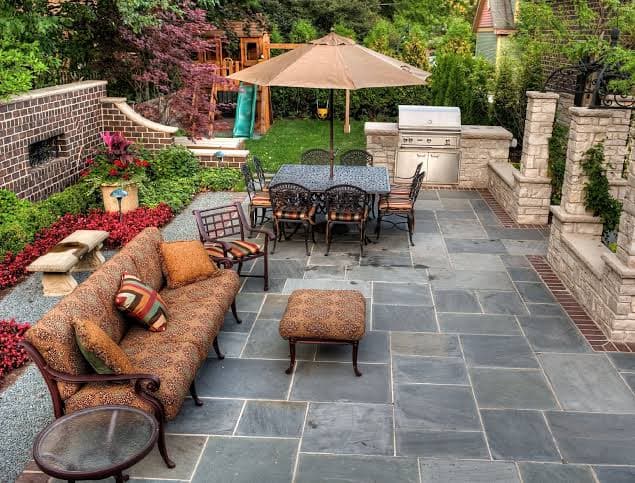
Paver patios & walkways FAQ
Do pavers shift or sink over time?
They can if the base wasn't compacted properly. A correctly built base — compacted aggregate with the right slope, plus polymeric sand locking the joints — is what keeps pavers flat and tight for the long run.
Can you match pavers to an existing patio or walkway?
In many cases yes, depending on whether the original paver style is still available. We'll look at what's there during the estimate and tell you honestly what will and won't match.